Industry Insights · August 18, 2020
Simultaneous Interpreting: Common Challenges and a Practical Techniques Checklist
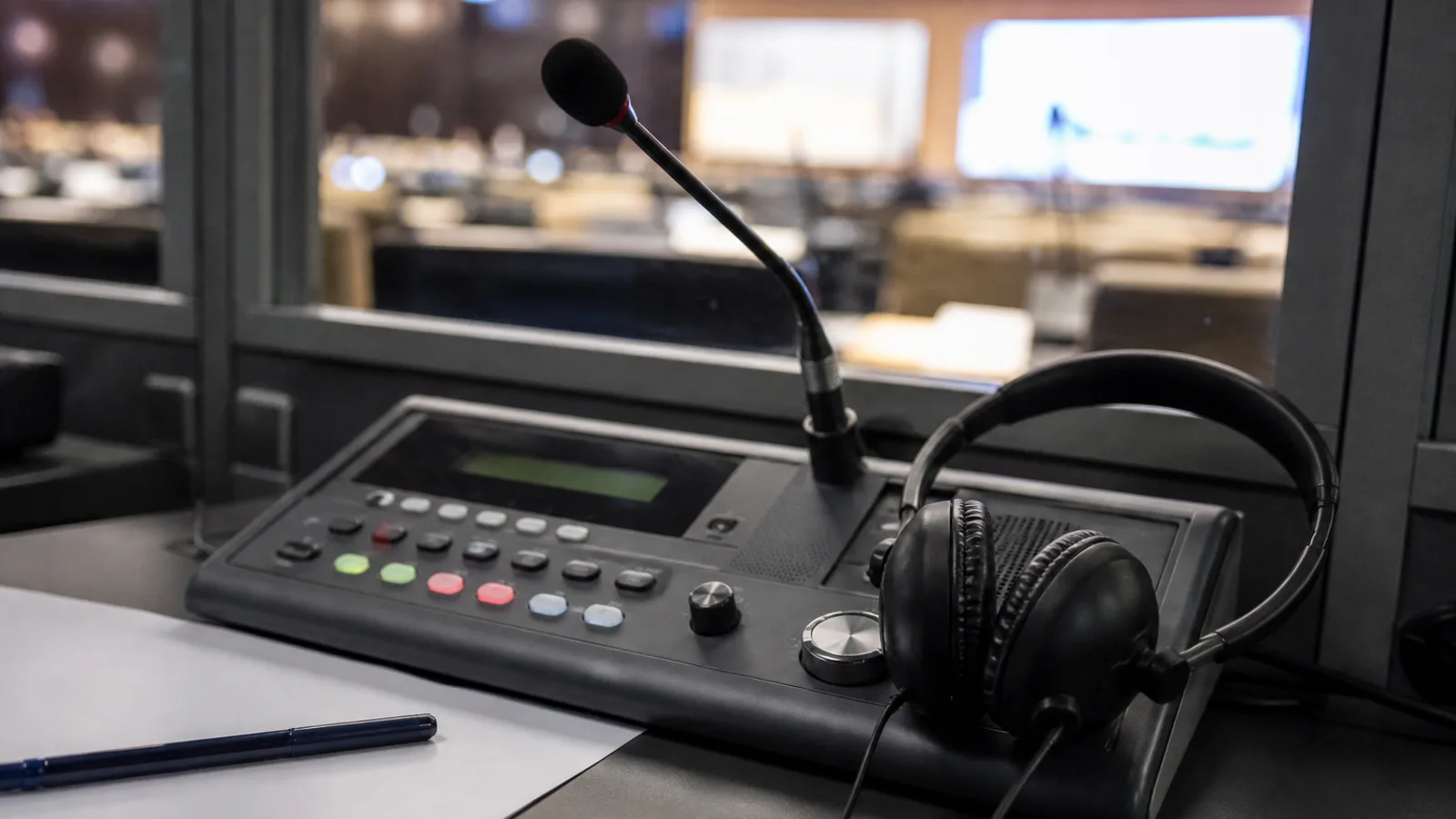
Many language learners dream of doing simultaneous interpreting one day. What problems do SI interpreters encounter most often, and what techniques help? Let's take a look.
1. Handling inverted structures
English and Chinese word orders differ greatly, which creates real difficulty. For example: Japan surrendered in 1945 after Americans dropped two atom bombs. In SI, you've often just rendered the first half — "日本人在 1945 年投降了" — when the second half arrives: "after the Americans dropped two atom bombs". If you've already followed English order, you must restructure and repeat, which looks unpolished.
Two approaches worth trying. First, don't follow too closely — wait until the speaker has delivered most of the sentence before starting. But in fast-paced SI you often can't wait that long. Second, split one sentence into two or three simple ones, adding connective words to link them organically. The example becomes: "日本人投降了,那是在 1945 年;在这之前,美国人投了两颗原子弹。" Not perfect, but the meaning comes through and the sentences flow.
2. Passive and active voice
English favors the passive; Chinese favors the active. For example: In some of the European countries the people are given the biggest social benefit such as medical insurance. Render it actively: "在有些欧洲国家里,人民享受到最广泛的社会福利,如医疗保险等等。" Under time pressure, interpreters easily slip into English structure — "人民被给予最大的社会福利". Listen carefully to SI at international conferences and you'll hear this common mistake; it deserves serious attention.
3. Handling long sentences
The most effective method for long sentences is segmentation: break the sentence into short clauses by sense group, then reorganize them with natural Chinese connectives — main idea first, details after. In training, shadowing and sight-translation drills build sensitivity to sense groups, so you can stay composed in the booth.
Let's talk about your language needs
Tell us about your project — we'll reply with a quote and delivery plan within one business day.