Industry Insights · September 19, 2026
Hanwha Ocean Deploys Shipyard-Specific AI Interpreting: Industrial Language Access Takes More Than “Seven Languages”
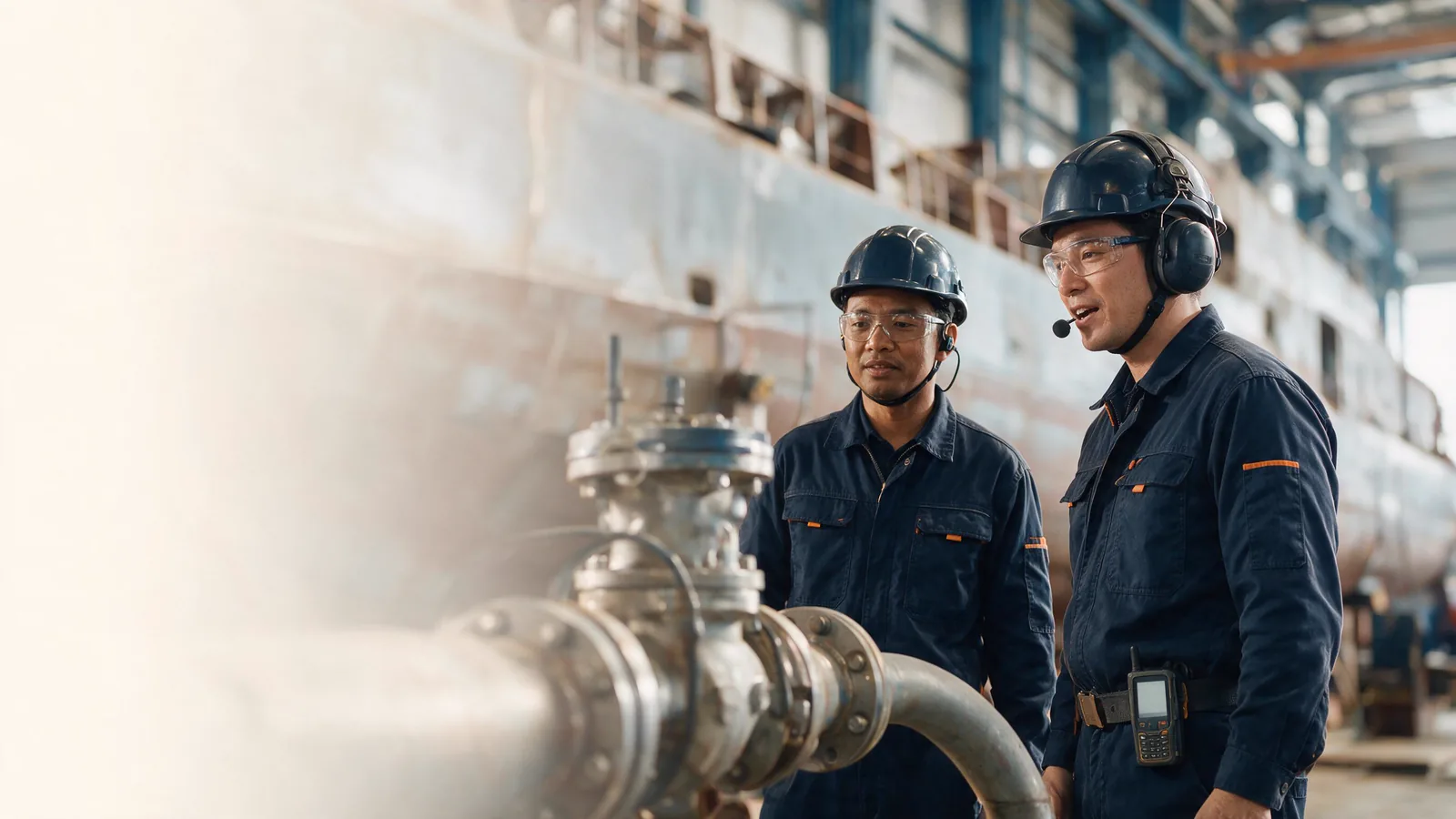
On September 16, South Korea's Hanwha Ocean announced the deployment of OTalk, a customized AI interpreting and translation system for shipyard operations. Hanwha Ocean's AX division planned the system around requirements gathered from the field, while Hanwha Systems and language-technology company Flitto jointly built it for communication, safety training, and information exchange between Korean managers and international workers.
Unlike a general-purpose translation tool, OTalk began with the shipyard's own language environment. Hanwha Ocean collected shipbuilding terminology, shop-floor jargon, regional dialect data, and operational requirements. Flitto used those inputs to build a customized glossary and adapt speech-recognition and translation models. Training covered seven major languages—including Korean, English, Vietnamese, and Thai—and separately addressed the Gyeongsang accent and recurring pronunciations used on site.
On an industrial site, the hardest problems often come before translation
In a shipyard, a language system must hear correctly before it can translate. Heavy-equipment noise, masks and protective gear, regional accents, and abbreviations understood only by experienced workers can all defeat a general speech model. The project therefore introduced five levels of sound-pickup adjustment for environments ranging from production areas and break rooms to offices and quiet interview spaces.
OTalk also places translation inside specific work processes. It supports one-to-one conversations, group chats translated according to each user's language setting, text/document/image translation, and real-time multilingual delivery during safety training. Reported usage among international workers reached about 96% during the pilot, and the system was later extended to supplier personnel following requests from partner companies. Usage shows adoption, however—not translation accuracy or safety impact. The public reports do not disclose either metric.
Three assets enterprises need before deploying on-site interpreting
- Worksite language assets: Go beyond standard terminology to include abbreviations, equipment names, role-specific expressions, accents, and recurring misrecognitions, with a process for continuous updates.
- Environmental test assets: Test under real noise, distance, protective-equipment, and connectivity conditions—not only in a quiet demonstration room.
- Risk and fallback workflows: Separate routine conversation, work instructions, and safety warnings. High-risk messages need read-back confirmation, access to human assistance, and a clear emergency-stop mechanism.
The lesson for manufacturing and engineering buyers is that industrial AI interpreting is not a generic model moved onto a factory floor. It is the engineering of field knowledge, language data, acoustic conditions, and management processes as one system. A model can expand communication coverage; reliable deployment depends on whether the organization is prepared to organize its own language assets and design verifiable, traceable safeguards for high-risk situations.
Sources: Seoul Economic Daily (September 16, 2026); Edaily Korea (September 16, 2026). Product capabilities and the 96% usage figure come from company disclosures reported by the media; no independent accuracy or safety-performance evaluation was provided in the public material.
Let's talk about your language needs
Tell us about your project — we'll reply with a quote and delivery plan within one business day.