Industry Insights · November 14, 2026
Can DeepL Aure Voice AI Replace Interpreters? Chinese Left Out
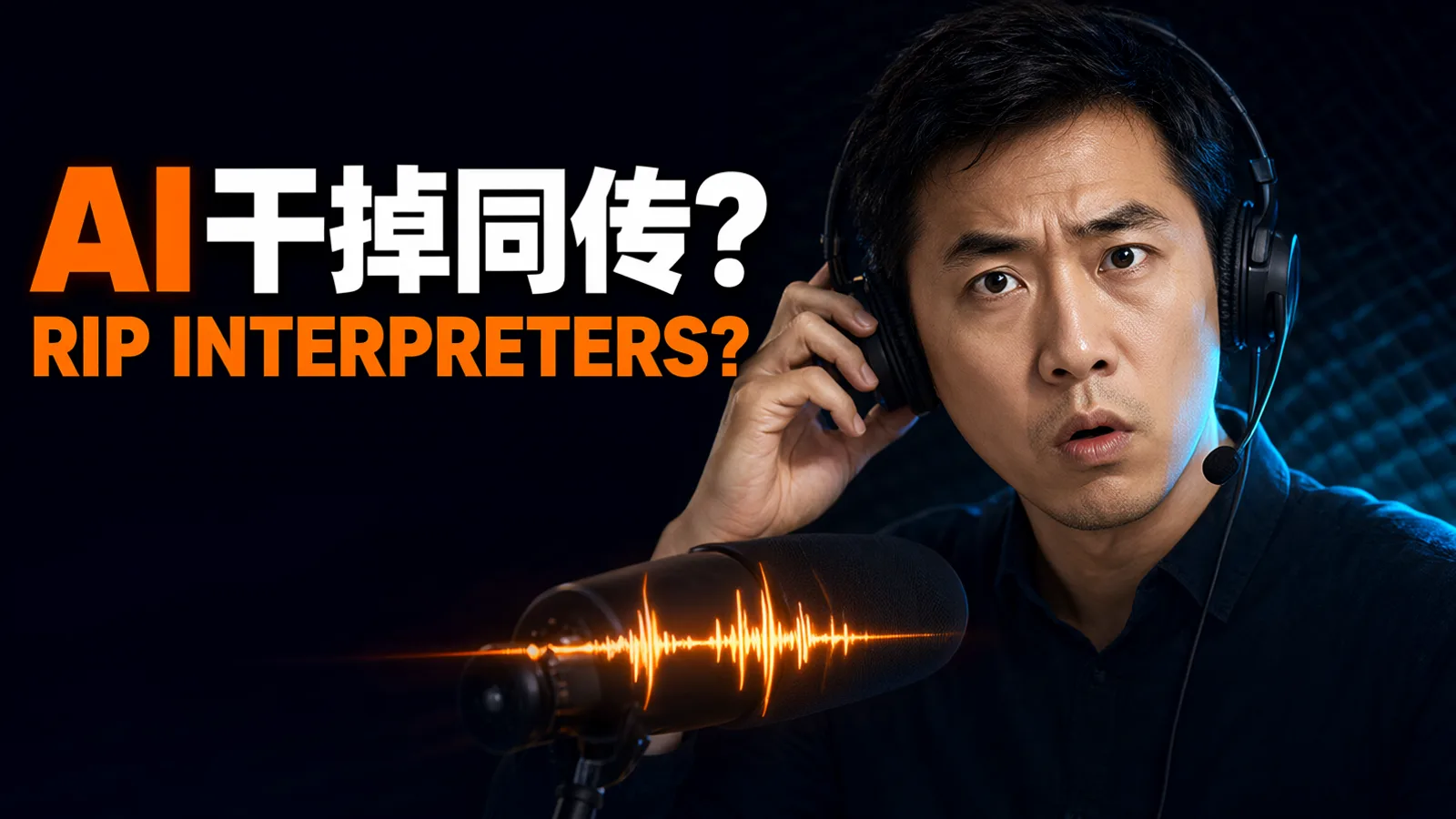
On 11 November, DeepL announced Aure in Cologne, a real-time voice model for its speech translation product, DeepL Voice. According to the announcement, Aure continuously adjusts translated speech as a speaker’s tone, emotion, emphasis, and pace shift, combining both the translated wording and the source audio to shape delivery. The capability turns on automatically with no extra configuration across online meetings, in-person conversations, and the DeepL Voice API. The initial eight languages are English, German, Spanish, French, Italian, Japanese, Portuguese, and Korean.
The product page states the boundary clearly: outside those eight languages, DeepL Voice automatically falls back to its previous voice models. DeepL’s separate meetings page states that online meetings cover 40 or more languages, listing Chinese among the examples. While a Chinese–English meeting can still run voice translation, neither the press release nor the Aure product page includes Chinese on the new model.
Eight Languages Switch Over (Excluding Chinese); Others Stay on Legacy Voice Models
Both the press release and the product page list the exact same eight languages. The product FAQ confirms that unsupported languages automatically use the previous voice models and that additional languages will follow without a published date. For global enterprises already using DeepL Voice, the first operational check is whether both the spoken and listening languages sit inside those eight.
DeepL’s meetings page highlights “40+ languages” for online meetings across Microsoft Teams, Zoom, and Google Meet. That figure refers to overall meeting translation coverage—not Aure’s voice-model coverage. Treating the platform’s total language count as Aure’s coverage overstates what a Sino-foreign negotiation or product launch will actually hear.
The same boundary applies to developers. Aure is enabled automatically in the DeepL Voice API only for supported languages; embedding the API into an internal enterprise app does not unlock the new voice model outside those eight languages.
DeepL Voice Enables Aure Automatically With No Documented Off Switch
The announcement notes that Aure activates automatically with no extra setup, and the product FAQ repeats that Aure becomes active across all three products for supported languages without configuration. Neither page documents an administrator toggle to keep sensitive meetings locked onto the previous voice model.
Consequently, any DeepL Voice session running within the eight supported languages switches onto Aure automatically under the public documentation. Organizations that require version lock for sensitive executive or legal calls must confirm with their account team whether an undocumented admin control exists.
“More Like the Speaker” and “76% Fewer Errors”: No Benchmark Design Published
DeepL positions Aure as the successor to an earlier voice-preservation update that sampled only the opening seconds of a conversation and missed later shifts in delivery. Aure is described as continuous prosody analysis—using pauses, added stress, shifts from serious to enthusiastic, and sarcasm as illustrative examples.
Under “online meetings,” the Aure page claims 76% fewer critical translation errors compared with platform-native meeting tools. However, the page publishes no test date, language pairs, sample size, or methodology showing whether the 76% measures lexical accuracy or vocal delivery. Named customers—Pioneer, Aramark, Avendra International, and Inetum—are cited as existing DeepL Voice users rather than published Aure benchmark studies. Similarly, the FAQ’s “yes” on noisy environments cites noise, cross-talk, and echo filtering without an independent field evaluation.
The press release describes a three-stream training pipeline separating vocal identity, prosody, and semantic content, paired with reinforcement learning to balance accuracy, audio quality, and “natural, accent-free” speech. No independent listening scores or accent evaluation criteria are disclosed.
Real-Time Voice Data Privacy: Page Statements Do Not Replace Your DPA
DeepL’s product page states that Aure matches voices on the fly without creating or storing permanent voiceprints, processing audio temporarily in memory and deleting it when the session ends. Transcripts and translations are likewise described as encrypted in transit, not stored permanently, and excluded from model training—which DeepL also cites to explain why cross-lingual speaker audio is scarce.
Even so, marketing-page assurances do not replace contract terms. Procurement and legal teams must still cross-check the Data Processing Agreement (DPA) for retention windows, subprocessors, and whether enabling meeting recording triggers separate storage rules.
Can AI Voice Replace Human Interpreters? Four Gates Before Live Meetings
- Language gate: Verify whether both spoken and listening languages fall within English, German, Spanish, French, Italian, Japanese, Portuguese, and Korean; Chinese and 30+ other languages remain on legacy voice models.
- Switch gate: Rollout is automatic with no documented toggle. Confirm with the vendor before running confidential meetings that require a locked baseline model.
- Evidence gate: Both “76% fewer critical errors” and “more like the speaker” are vendor statements. Pilot with your actual speakers, room acoustics, and language pairs rather than relying on FAQ claims.
- Delivery gate: Contract signings, regulatory hearings, investor roadshows, and negotiations where every proper noun and figure carries legal weight still require a human interpreter who can intervene on the spot. AI voice synthesis cannot assume accountability for live commercial meaning.
Aure brings dynamic tone and pacing into DeepL Voice, yet confines that upgrade to eight languages (excluding Chinese) with automatic activation and no published benchmark design. Before deploying AI voice tools in cross-border meetings, enterprises should audit language pairs, admin controls, and DPA clauses—and rely on professional conference and simultaneous interpreting backed by dedicated SI booth and equipment support whenever accuracy on names, numbers, and commitments is non-negotiable.
Sources: DeepL press release (11 November 2026); DeepL Aure product page; DeepL Voice meetings page. Language coverage, the 76% claim, and session-deletion statements are cited from DeepL’s public pages; no independent third-party listening study had been published at press time.
Let's talk about your language needs
Tell us about your project — we'll reply with a quote and delivery plan within one business day.